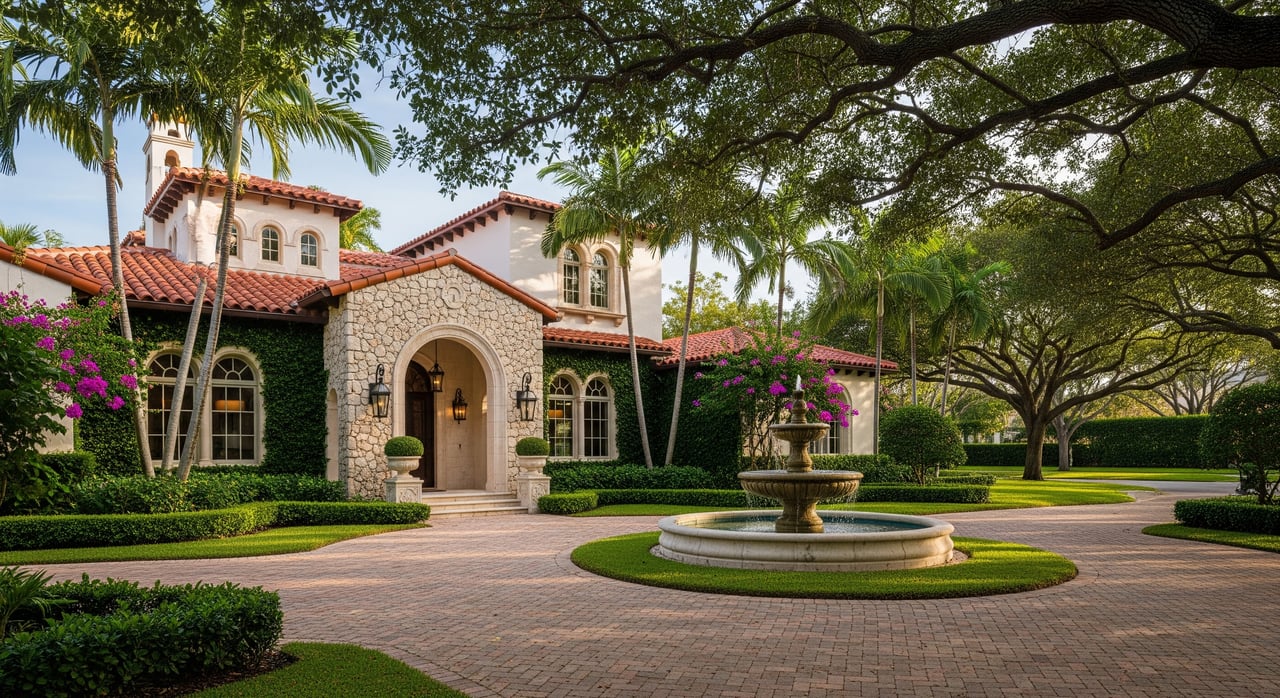
Are you seeing wildly different prices in Coral Gables and wondering why one home sells in days while another sits? You’re not alone. In Coral Gables, value can shift block by block based on water access, lot size, and architecture. In this guide, you’ll learn how the market is organized, how to read premiums for land and design, and when timing works in your favor. Let’s dive in.
How the Coral Gables market is built
Coral Gables is not one market. It’s a set of micro-markets driven by land and lifestyle. Start by thinking in four tiers:
- Ultra-luxury waterfront estates. Open bay or deep-water access, often in gated enclaves like Gables Estates. Highest price per square foot and the most volatile.
- Premium non-waterfront single-family. Large lots in the historic core near Miracle Mile and canopy-rich avenues, close to amenities.
- Transitional and infill parcels. Smaller lots or older homes where builders replace with new construction. Active with spec product.
- Entry or secondary move-up homes. Smaller single-family homes, often on tighter lots, priced at the lower end for Coral Gables.
Organize your search or analysis by these tiers first. Mixing them will blur true premiums and misprice your next move.
What creates micro-markets
Waterfront types matter
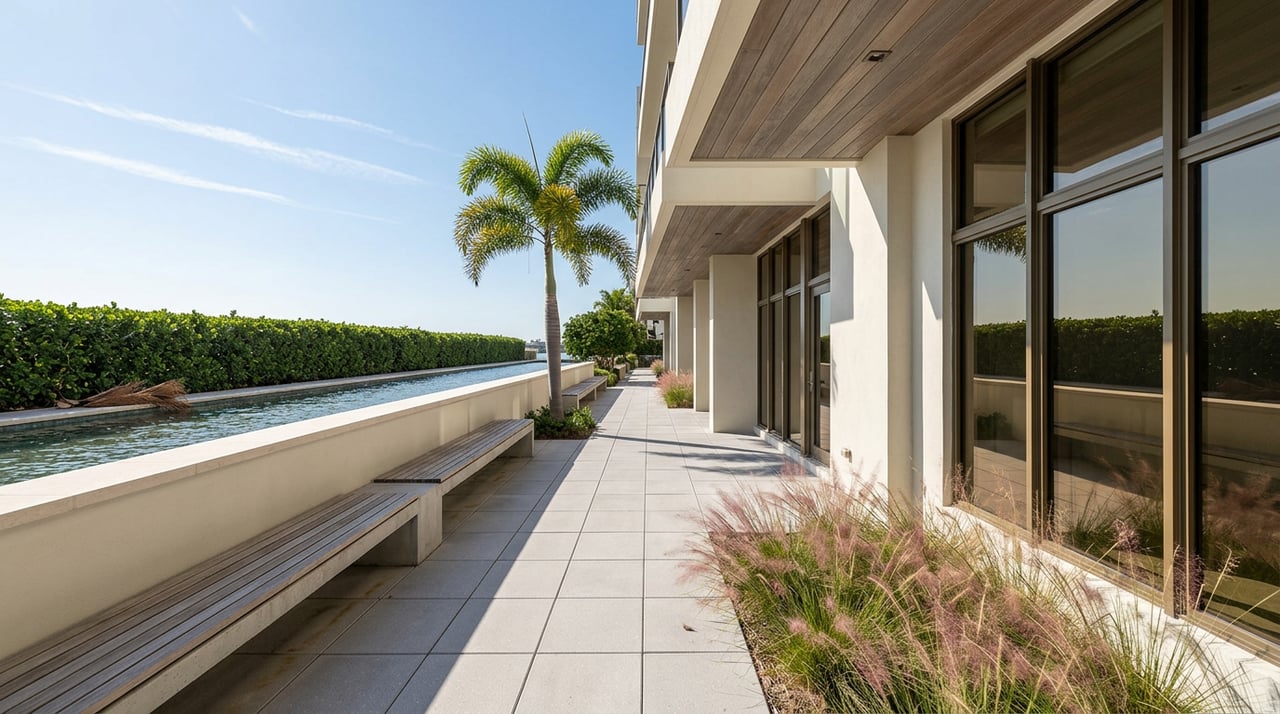
Water access defines buyer pools and pricing. Direct bay frontage and deep-water access trade at a premium over wide canals, which in turn trade above narrow or restricted canals. Compare like with like, and normalize by the width of the waterway and navigational access.
Lot size and shape
Bigger, regular-shaped lots with generous buildable envelopes command higher prices. Lot depth, street or waterfront frontage, and overall buildability contribute to value beyond the size of the house.
Historic core vs peripheral pockets
Old Coral Gables near Miracle Mile often carries a premium for streetscape character, canopy, and architectural cohesion. Peripheral areas closer to busy arteries or city edges can trade differently. Always compare within the same pocket when possible.
Proximity to amenities
Distance to downtown Coral Gables retail, private schools, the University of Miami, country clubs, and parks influences demand. Convenience sells, especially in the luxury segment.
Zoning and preservation
Historic designation, local setbacks, and tree-preservation rules can limit or shape renovation plans. This affects tear-down economics and the appeal of certain parcels. Confirm feasibility before pricing a remodel or rebuild.
How to read prices without getting misled
Separate inventory by tier
Do not mix waterfront with non-waterfront comps. Then create lot-size groups, and split each by condition: original or historic, renovated or updated, and new construction or rebuild. Calculate medians within each bucket rather than across the whole market.
Track the right metrics
- Price per GLA square foot. Useful, but handle with care for land-heavy estates.
- Price per lot square foot. Better for larger parcels or teardown scenarios.
- Price per waterfront linear foot. Essential for seawall frontage, normalized by canal width and access.
- Land share ratio. Estimate how much of the price is land value using recent teardown comps or assessor land values in the same block.
- DOM and list-to-sale ratio. Gauge absorption and negotiating room by tier.
A practical workflow
- Separate waterfront and non-waterfront.
- Create lot-size bins, for example: under 10,000 square feet, 10k–20k, 20k–1 acre, over 1 acre.
- Tag condition and type: original, renovated, new construction.
- Compute medians for sale price, price per GLA, and price per lot square foot for each bin.
- Use 3- or 6-month rolling medians to smooth small-sample noise.
Lot premiums in Coral Gables
Lot characteristics often drive a large share of value. Buyers pay more for direct bay or deep-water access, wider canals, longer seawall frontage, and larger or better-shaped parcels. Elevation and flood risk also matter because they influence future insurance costs and peace of mind.
How to estimate a lot premium:
- Compare recent sales on the same waterbody or within the same block.
- Hold house size and condition roughly constant.
- Compute the difference in price per lot square foot or per waterfront linear foot.
- Where direct comps are limited, use recent teardown sales as a land-value proxy.
Example approach: If two nearby sales have similar house sizes but one sits on a 15,000 square foot lot and the other on 10,000 square feet, the difference in total price divided by the 5,000 square foot lot delta can reveal a per-1,000 square foot lot premium for that street.
Architectural and design premiums
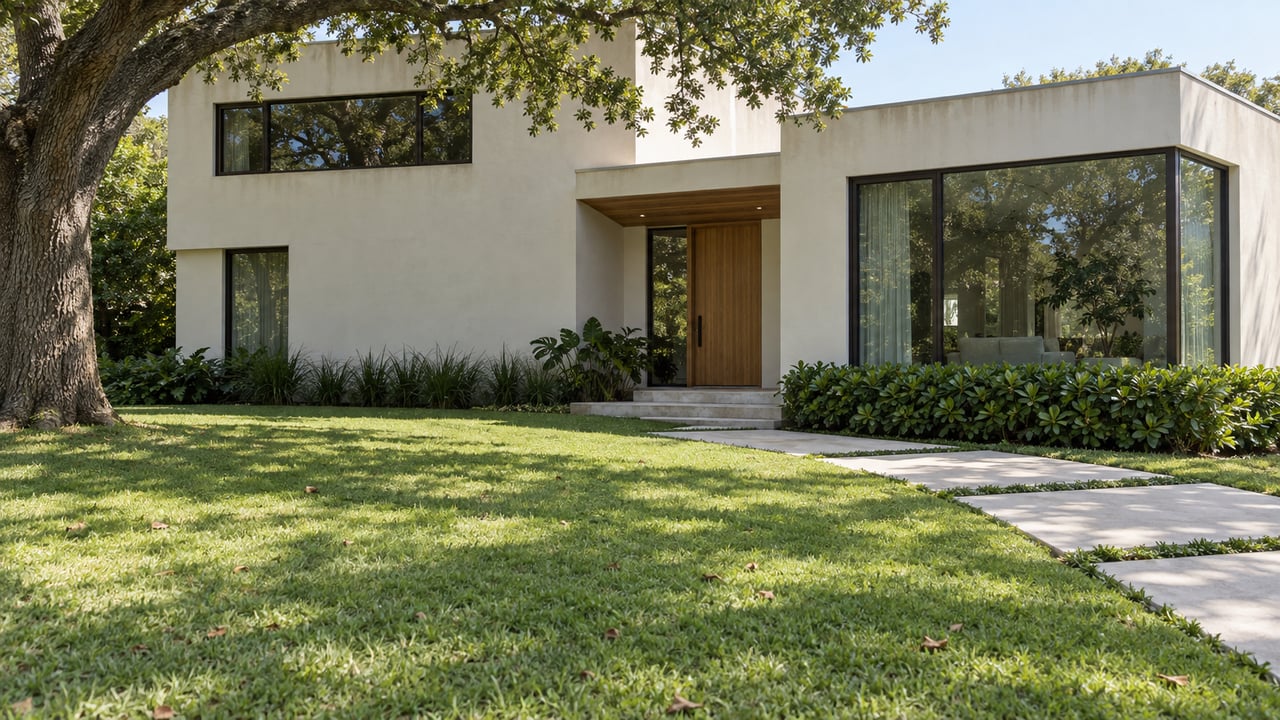
Historic Mediterranean Revival character in the core can attract buyers who value authenticity and mature landscaping. Contemporary new construction often earns higher price per square foot for modern layouts, ceiling heights, and luxury finishes. Renovation quality matters, especially when upgrades are permitted and systems are modernized, including hurricane protection.
Layout also counts. Single-level living, indoor-outdoor flow, and functional bedroom counts resonate with luxury buyers. To quantify design premiums, compare renovated or new-construction sales to equivalent unrenovated homes on the same block, adjusting for lot differences.
The interaction of land and architecture
A smaller lot with a standout renovation can bring a strong price per square foot, but it may not match the total price of a larger, older estate. On prime waterfront, dated homes often price close to land value if buyers plan to rebuild. Historic designation can raise value for the right buyer or reduce it for someone who wants to expand, so track both buyer demand and local permit activity.
Seasonality and timing
Coral Gables is active year-round, but patterns exist. Buyer traffic typically rises in winter, roughly November through April, when seasonal residents and visitors are in town. Spring often brings more listings and showings, and many luxury sellers launch in early fall to be fully marketed for winter. Late summer into early fall can slow, partly due to school starts and storm season concerns, though inventory can also appear as sellers try to avoid winter crowds.
What this means for you:
- If you’re selling. Consider listing in early fall or late fall to capture winter demand. Presentation, pricing, and distribution matter most in the first 30 days.
- If you’re buying. You may find more negotiating room in late spring or summer when activity eases. Use rolling data rather than month-to-month jumps when you evaluate price trends.
Avoid these common pitfalls
- Mixing waterfront and non-waterfront comps in one table.
- Relying only on price per GLA square foot for land-heavy estates.
- Ignoring lot shape, frontage, and buildability when comparing values.
- Overlooking zoning, preservation status, or tree protections that affect remodels.
- Skipping flood zone and elevation checks that impact insurance and demand.
- Reading small-sample medians without using 3- or 6-month rolling windows.
Simple checklist before you offer or list
- Confirm water type and navigational access if waterfront.
- Measure lot area, depth, and frontage, including any waterfront linear feet.
- Review permits, renovation years, and any demolition history nearby.
- Check FEMA flood zone and elevation.
- Tag condition: original, renovated, or new construction.
- Compare within the same micro-market and lot-size bin.
- Use both price per GLA and price per lot square foot to triangulate value.
- Look at days on market and list-to-sale ratios for your tier.
How we help you win
You deserve advice tuned to Coral Gables’ micro-markets. As a bilingual luxury advisor with the reach of Douglas Elliman, Ruben brings a boutique, concierge-first approach supported by institutional tools. For sellers, that means polished presentation, targeted marketing, and global distribution that meets affluent buyers where they are. For buyers, it means curated access, fast intelligence on new or off-market opportunities, and rigorous valuation that respects land, architecture, and seasonality.
Whether you are trading up in the historic core or evaluating a waterfront estate, you’ll get clear pricing frameworks, permit and zoning checks, and data-backed negotiation strategies. Ready to align your move with the market’s true drivers? Work with Ruben Chamorro and make your next decision with confidence.
FAQs
How does Coral Gables waterfront impact value?
- Waterfront premiums depend on water type and access. Compare recent sales on the same waterbody with similar frontage, and normalize for canal width and navigation to estimate a per-foot or per-lot premium.
How should I compare lot sizes in Coral Gables?
- Group homes by lot-size bins and micro-market, then compare price per lot square foot and total price. Use nearby sales with similar house size and condition to isolate the lot premium.
Do historic homes in the core always sell for more?
- Not always. Many buyers value authentic Mediterranean character and canopy, but preservation rules can limit changes. Track demand and permits to see how buyers in that pocket are reacting.
When is the best time to list a luxury home?
- Many sellers aim for early or late fall so the home is fully marketed during winter high season. Winter generally sees more buyer activity, while late spring and summer can offer buyers more negotiation leverage.
What’s the best way to read price per square foot?
- Use price per GLA square foot with caution and pair it with price per lot square foot. Separating waterfront from non-waterfront and tagging condition will give you a truer signal.
How do flood zones and elevation affect pricing?
- Parcels with higher elevation or outside higher-risk flood zones can reduce future insurance costs and often carry a premium. Always verify flood maps and elevation before final pricing or offers.